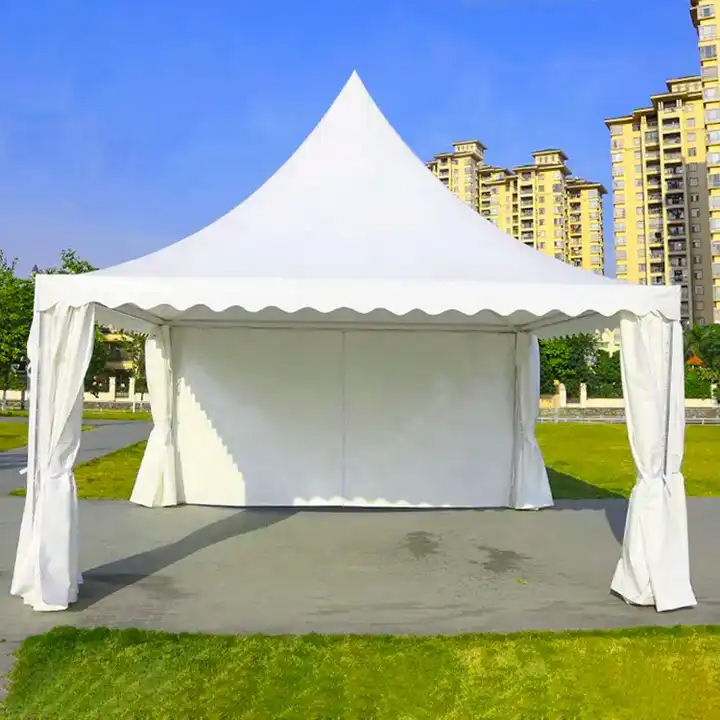
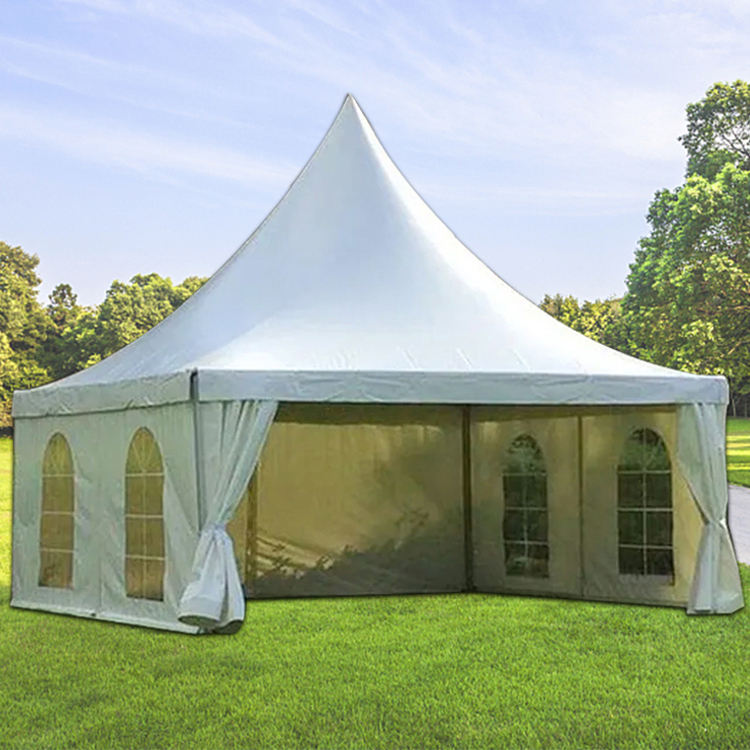
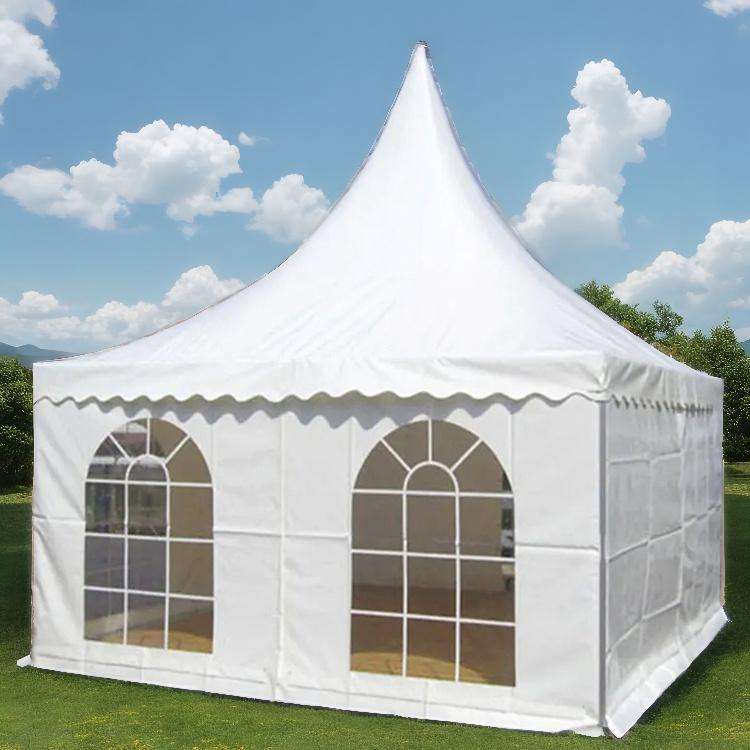
The spider tent has a unique shape, stronger support, suitable for large-scale brand events, and stronger visual impact.
The main differences between spider tents and traditional inflatable tents are reflected in the following five aspects.
① Structural design:
Spider tents usually use a special support structure, which may consist of multiple foldable supports that are connected and supported to form a tent frame. The distribution of the supports is similar to that of spider legs, providing relatively stable support. Traditional inflatable tents are supported by air columns. Inflate the tent into the air column through an inflation pump, causing the air column to expand and support the tent. The overall structure is relatively simple, without complex support components.
② Construction and storage:
When setting up a spider tent, it is necessary to connect and assemble the various support components, and then cover and install the tent fabric, which is relatively time-consuming, especially for large spider tents, which may require multiple people to collaborate. When storing, it is also necessary to dismantle the bracket and fold the tent fabric, which is a cumbersome process. Traditional inflatable tents can be set up quickly by simply unfolding the tent and connecting an inflation pump to inflate it. When storing, fold the tent after deflating, which has a smaller volume and relatively lighter weight, making it easy to carry and store.
③ Space utilization:
Spider tents usually occupy a certain amount of space due to their brackets located inside or at the edges of the tent, which may affect the layout of the internal space and result in relatively low space utilization. The interior space of traditional inflatable tents is relatively spacious, with air columns generally located around the tent and not occupying the main interior space. The dome design can also make the space appear taller and more open, resulting in higher space utilization.
④ Stability and wind resistance:
Spider tents can have good stability and wind resistance if the bracket quality is good and the construction is reasonable, especially for products that use high-strength metal brackets. But in extreme weather conditions such as strong winds, the bracket may be damaged due to excessive force. The stability and wind resistance of traditional inflatable tents vary depending on the material and design. High quality inflatable tents have thick and sturdy air columns, paired with heavy fabrics, and have good wind resistance. However, some inflatable tents with poor quality or thin air columns may become unstable or even blown over during strong winds, and if the air column is pierced by sharp objects, it will affect the stability of the tent.
⑤ Weight and portability:
If the bracket of a spider tent is made of metal material, the overall weight is usually heavy and the portability is poor. It is suitable for scenarios such as car camping and is not easy to carry on long hikes. Traditional inflatable tents, when folded and stored, have a small volume and light weight, making them easier to carry. In particular, some inflatable tents made of lightweight materials are more suitable for activities such as hiking and wilderness exploration that require carrying equipment.